
Best overall for families wanting managed nonmedical support: an agency that employs its caregivers. Best for control over the caregiver relationship: direct hiring. Best for companionship rather than hands-on care: a companion service. This 2026 Families guide compares private home care services by care needs, supervision, backup coverage, and household responsibilities—not an unsupported ranking of local providers.
- Choose private home care services by required tasks, not by a provider’s service label.
- An employer-based home care agency is the default choice when you want staffing and supervision handled together.
- Direct hiring suits households prepared to manage employment obligations and arrange replacement care.
- Use the Families private home care services guide to compare arrangements before interviewing local providers.
Why this matters
Private home care is not one standardized service. Companionship, help with bathing, and skilled nursing involve different tasks, qualifications, and supervision. Paying privately describes the payment arrangement; it does not establish what a caregiver is qualified or permitted to do.
Choose the care tasks first and the hiring arrangement second. A provider that sounds convenient is still the wrong choice if its workers cannot safely perform the help your household needs.
For your 2026 search, begin with a written description of a typical day. Include transfers, toileting, meals, nighttime needs, memory-related concerns, and any clinician-directed treatment. That description gives every candidate the same assignment to assess.
What makes the best private home care services
Judge each option against these criteria before comparing names:
- Task fit: The written service scope covers the actual assistance required, including any hands-on personal care.
- Employer clarity: You know who employs the caregiver, handles payroll, and carries the relevant insurance.
- Caregiver suitability: Screening, training, and demonstrated skills match the person’s needs—not just a generic job description.
- Supervision: A named contact handles care-plan changes, concerns, and performance problems.
- Backup coverage: You understand what happens when the assigned caregiver cannot attend, including any limits on replacement staffing.
- Written terms: Scheduling, cancellation, complaints, and service boundaries appear in documents you can review before signing.
No arrangement wins every criterion. Decide which responsibilities your household can reliably handle before choosing the option that leaves those responsibilities with you.
Private home care options at a glance
These are hiring and service models, not interchangeable providers. The order favors managed nonmedical support as the starting point, then separates alternatives by the problem they solve.
| Rank and option | Best for | Standout feature | Key limitation |
|---|---|---|---|
| 1. Employer-based home care agency | Managed daily personal support | Employment and service oversight sit with the agency | Caregiver choice and scheduling depend on the agency’s terms |
| 2. Direct-hire caregiver | Household control over the working relationship | You select and manage the caregiver directly | Employment and backup responsibilities need household management |
| 3. Caregiver registry or referral service | Help finding independent candidates | Introductions without necessarily providing ongoing care management | Screening, supervision, and employer responsibilities vary |
| 4. Companion or homemaker service | Social support and household routines | Focus on nonclinical daily activities | Does not establish suitability for hands-on personal care |
| 5. Private-duty nursing service | Clinician-directed skilled care | Licensed nursing matched to a clinical need | Does not automatically cover every household-support task |
1. Employer-based agency: best for managed daily support
An employer-based home care agency hires caregivers and provides services under an agreement with your household. This model is the strongest starting point when you need help with daily activities and want an organization responsible for staffing and oversight.
Confirm the employment arrangement rather than relying on the word agency. Ask who directs the caregiver’s work, receives complaints, and responds to a missed visit.
Employer-based agency pros:
- A defined organization manages the caregiver relationship.
- You have an agency contact for service concerns.
- Replacement staffing can be addressed in the service agreement.
Employer-based agency cons:
- Your preferred caregiver and schedule depend on staffing arrangements.
- Agency policies can limit task flexibility or caregiver selection.
Best for: Households needing recurring personal assistance without taking on direct caregiver employment.
For a 2026 shortlist, ask each agency to explain its assessment process and show how requested tasks enter the care plan. Get the missed-visit procedure in writing; an emergency contact is not the same as a commitment to send a replacement.
Verdict: Buy this model when managed staffing and supervision matter most, after confirming the written scope.
2. Direct-hire caregiver: best for household control
Direct hiring means your household selects and contracts with a caregiver without an agency managing the service. It gives you direct control over the working relationship, but it also requires a clear plan for administration, supervision, and absences.
Worker classification depends on the facts of the arrangement and applicable law. Calling someone an independent contractor does not settle their employment status.
Direct-hire caregiver pros:
- You choose the individual rather than an agency assignment.
- You discuss routines and expectations directly with the caregiver.
- You control your own selection and performance-review process.
Direct-hire caregiver cons:
- Payroll, tax, insurance, and employment obligations require attention.
- You need a separate plan for illness, leave, and sudden departures.
Best for: Households with someone able to manage the caregiver relationship consistently.
Before hiring, check references, verify relevant qualifications, and define tasks in writing. Get qualified payroll or legal advice on your responsibilities rather than treating a payment app or contract template as an employment solution.
Write a 7-day care schedule covering required visits and uncovered periods. Assign responsibility for each gap before the caregiver starts.
Verdict: Buy this model when control is the priority and your household can manage the employer responsibilities.
3. Caregiver registry: best for finding independent candidates
A caregiver registry or referral service introduces families to potential caregivers. Its role can stop at the introduction or include additional services, so the contract matters more than the label.
This arrangement separates finding a caregiver from managing care. Do not assume that a referral includes ongoing supervision, replacement staffing, or responsibility for the caregiver’s work.
Caregiver registry pros:
- Provides a route to caregiver candidates.
- Lets you interview individuals before making an arrangement.
- Can suit households that want recruitment help without agency-managed care.
Caregiver registry cons:
- The household’s responsibilities can resemble direct hiring.
- Screening and replacement assistance depend on the specific agreement.
Best for: Families that can manage care themselves but want help identifying candidates.
Ask exactly what the registry checks and what documentation you receive. A statement that a caregiver is screened should lead to specific questions about references, credentials, background checks, and the date of each check.
For a 2026 agreement, distinguish the referral service’s obligations from the caregiver’s obligations. Identify who handles complaints after the introduction and whether any replacement assistance is included.
Verdict: Hold until the referral agreement makes ongoing responsibilities clear.
4. Companion service: best for social and household support
Companion and homemaker services focus on activities such as conversation, meal preparation, light household tasks, and errands within the agreed scope. They fit a different need from hands-on help with bathing, toileting, or transfers.
Service names vary. Confirm the actual tasks instead of assuming that a companion can provide personal care or clinical assistance.
Companion service pros:
- Centers the plan on social contact and everyday routines.
- Makes household-support tasks explicit.
- Fits needs that do not require hands-on personal assistance during the visit.
Companion service cons:
- Does not establish qualifications for transfers or personal care.
- A change in needs can require reassessment or another service type.
Best for: People seeking company and practical household help rather than hands-on care.
Describe what happens on a difficult day, not just a good day. If the person sometimes needs physical help getting out of a chair, disclose that before accepting a companion-only arrangement.
Ask how the service reports changes such as missed meals, increased confusion, or difficulty walking. Reporting a concern is different from being qualified to assess or treat it.
Verdict: Buy for companionship and household routines; skip as a substitute for required personal or nursing care.
5. Private-duty nursing: best for skilled clinical needs
Private-duty nursing involves care delivered by licensed nursing professionals within their permitted scope. It belongs on your shortlist when a clinician identifies nursing tasks that nonmedical caregivers cannot perform.
Nursing services and personal-support services are not interchangeable. Confirm the required nursing license, clinical oversight, orders where applicable, and the exact tasks covered.
Private-duty nursing pros:
- Matches clinical tasks with licensed professionals.
- Provides a route to nursing oversight for the agreed care.
- Supports planning around clinician-identified needs.
Private-duty nursing cons:
- Nursing qualifications do not mean every household task is included.
- A nursing visit does not automatically provide continuous supervision between visits.
Best for: People with assessed needs requiring licensed nursing care at home.
Ask the treating clinician to identify the nursing tasks before requesting proposals. Then ask each service how it coordinates changes in the treatment plan and communicates concerns.
If someone needs 24-hour supervision, specify that separately. Scheduled nursing visits, overnight presence, and continuous coverage describe different arrangements; none should be inferred from the phrase private-duty care.
Verdict: Buy when skilled nursing is required; skip as the default answer to nonclinical household needs.
How to turn the comparison into a shortlist
Use the same sequence for every candidate. Consistent questions make differences visible without relying on a polished sales conversation.
Define tasks
Separate companionship, household help, personal care, and nursing tasks. Include physical assistance and nighttime needs. Ask a qualified clinician to clarify any task whose required skill level is uncertain.
Confirm responsibility
Identify the employer, supervisor, and escalation contact. Establish who updates the care plan and who arranges replacement coverage. Record names and contact methods in one place.
Verify capability
Request evidence relevant to the tasks: professional licenses where required, training, references, and screening details. Ask how the proposed caregiver demonstrates safe assistance rather than accepting a general assurance of experience.
Plan coverage
Build the schedule around actual needs. Include travel time for family helpers and any periods when nobody is assigned. Compare 3 candidate services or arrangements using the same task list when you have suitable choices.
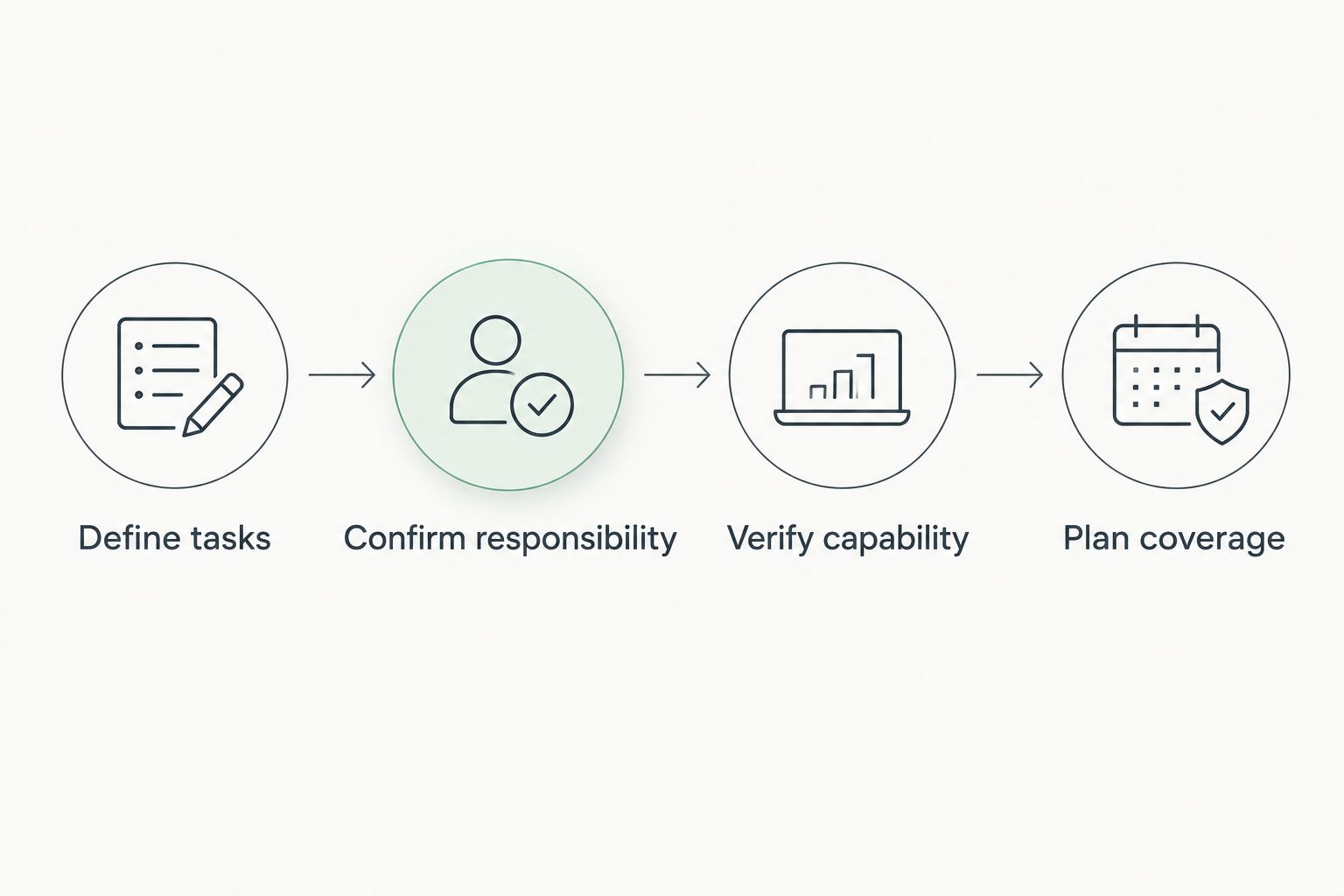
A completed shortlist should show who performs each task and who responds when the plan fails. Keep unresolved questions visible until the provider answers them in writing.
How the options are ranked
This 2026 ranking uses task fit, employer clarity, caregiver suitability, supervision, backup coverage, and written terms. It ranks arrangements by the needs they address; it does not score individual businesses or claim that one local provider outperforms another.
The employer-based agency leads for managed nonmedical support. Direct hiring leads for household control, while nursing takes priority whenever the required tasks call for licensed clinical care.
Which private home care services should you choose?
Start with an employer-based agency if you need recurring personal care and want staffing responsibility outside the household. Choose direct hiring only after assigning someone to manage employment, supervision, and backup coverage.
Choose a companion service when the agreed need is social or household support. If clinical tasks are involved, obtain a nursing assessment rather than asking a nonmedical caregiver to stretch beyond the role.
For a 2026 decision, the strongest proposal is the one that connects your task list to named responsibilities. A familiar provider name cannot replace that match.
FAQ
What are the best private home care services for an older parent?
An employer-based home care agency is the starting choice when an older parent needs managed nonmedical personal support. Choose by required tasks, supervision, and backup arrangements; use licensed nursing services when clinical needs require them.
Is hiring a private caregiver better than using an agency?
Direct hiring is better for households prioritizing control and prepared to manage employment responsibilities. An employer-based agency is better suited to households wanting an organization to manage staffing and service oversight.
What is the difference between home care and home health care?
Home care commonly describes nonmedical help, while home health care commonly involves clinical services such as skilled nursing or therapy. Names alone are insufficient; verify the provider’s written scope, qualifications, and payment arrangements.
Can a companion help with bathing and lifting?
Do not assume a companion can provide bathing assistance or transfers. Confirm that those tasks are permitted, included in the service agreement, and assigned to a caregiver with suitable training.
Does private home care include overnight support?
Overnight support must be explicitly arranged. Ask whether the proposed service involves a sleeping caregiver, an awake caregiver, scheduled visits, or continuous supervision, and document the required duties.
What should I ask before signing a home care agreement?
Ask who employs the caregiver, which tasks are covered, who supervises care, and what happens after a missed visit. Review cancellation terms, insurance responsibilities, complaint handling, and replacement arrangements before signing.
How should I compare private home care costs?
Compare written quotes against the same tasks and schedule. Ask about minimum visit lengths, overnight arrangements, administrative charges, and cancellation terms without assuming that a lower headline rate buys equivalent care.
One last thing
Ask every finalist what happens if the caregiver does not arrive tomorrow. Request the actual procedure, responsible contact, and limits of replacement coverage—not a general promise that someone will help.
Keep a household backup plan even after choosing a service. The Families private home care services guide is best for families comparing care arrangements before interviewing providers. Your final choice should turn those arrangements into clear, written responsibility for the person receiving care.